Ever found yourself wondering about tire dimensions, especially those that seem to be in an alien language? 285/75R18, for instance, is a common size you might encounter, particularly if you're into large vehicles or off-roading. But what does it mean? Let's break it down and make sense of this number-lettter-soup in a comprehensive, SEO-friendly way.
Understanding tire sizes isn't as intimidating as it seems once you grasp the coding system. It's like learning a new language, and today, we're going to help you speak 'tire size'. So, buckle up as we dive into the world of 285/75R18 tires.
Understanding Tire Size Code
The 285/75R18 code is a standard way to denote tire sizes. Let's demystify it:


1. The first three digits (285) are the tire's width in millimeters. So, a 285/75R18 tire is 285mm wide.
Tire Width: What it Means and Why it Matters
A tire's width greatly influences its performance and handling. It's like the foundation of a building; wider is more stable, but also heavier and bulkier. Inversely, narrower tires are lighter and faster, but less stable.


Consider the 285mm width of your 285/75R18 tires. This width is perfect for large vehicles and provides excellent stability for heavy loads and off-roading. It's a balance between functionality and performance, thanks to its not-too-wide, not-too-narrow size.
Asymmetric and Directional Tires: Width Matters Even More
Some high-performance tires are asymmetric or directional. Asymmetric tires have different tread patterns on each side of the tire, designed to optimize performance. Directional tires have a specific rotation, enhancing performance in certain conditions. Understanding your tire's width becomes even more critical when considering these specialized tires.
Tire Profile and Rim Diameter
Now, let's tackle the remaining numbers in our 285/75R18 code:


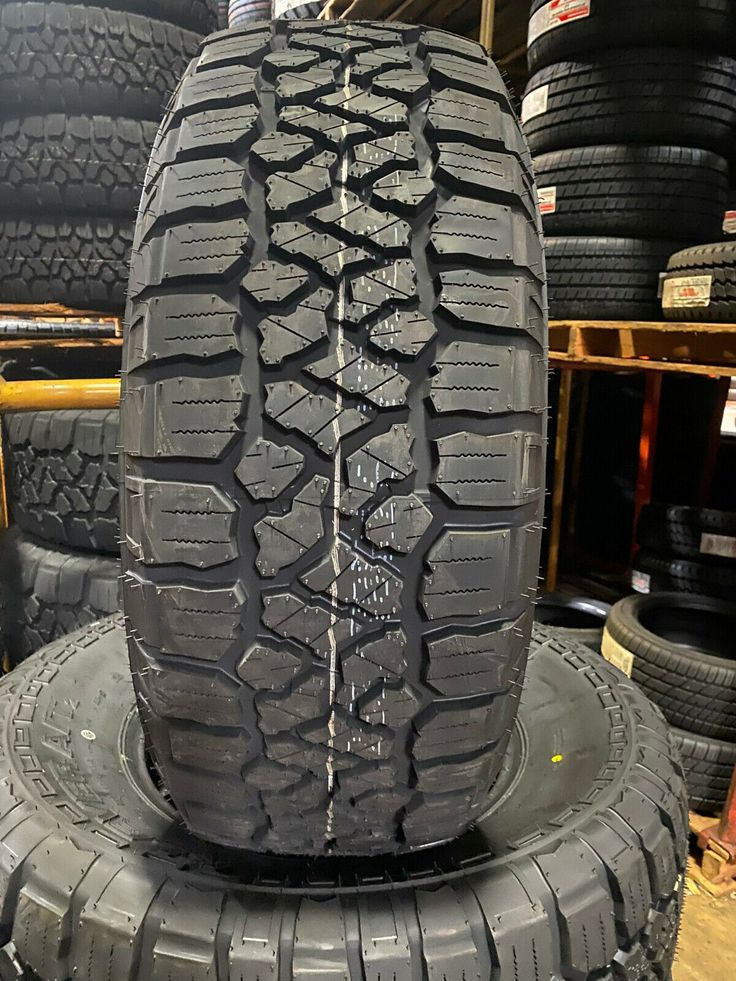


2. The second pair of numbers (75) is the profile, representing the tire's aspect ratio. It's the height of the tire's cross-section as a percentage of its width. So, a 75 series tire has a height that's 75% of its width.
3. The final number (18) is the rim diameter in inches. It's essentially telling you what size rim your tire fits.
Aspect Ratio: How it Affects Performance
The aspect ratio significantly impacts your tire's handling, stability, and comfort. Lower aspect ratios (like 55 or 60) provide better stability and cornering grip. However, they have smaller sidewalls, which can lead to a firmer, less comfortable ride.


On the other hand, higher aspect ratios (like 75) have taller, more flexible sidewalls. This offers more handling comfort but at the cost of some stability in cornering.
Rim Diameter: The Fit Matters
Matching your tire's rim diameter to your vehicle's rim is the key to a safe, secure fit. It affects everything from handling to safety features like airbags and even your speedometer and odometer readings.
The 18" rim diameter in your 285/75R18 tire means it's designed to fit an 18-inch rim perfectly. However, it's always best to double-check with your vehicle's manual or a professional when in doubt.
In the tire world, knowledge is power. Understanding your 285/75R18 tires, and tire sizes in general, empowers you to make informed choices about your vehicle, its performance, and your safety. So, don't shy away from those mysterious-looking tire size codes. Now you know you can decode them!