Ever found yourself in need of converting 36 liters to ounces, perhaps while cooking, traveling, or dealing with a product's unit label? You're not alone, and we're here to help, with a comprehensive guide to this common conversion, practical examples, and some fun facts along the way. Let's dive right in.
First, let's clear up a common misunderstanding. The imperial system (used primarily in the United States) has different definitions for the ounce in volume (fluid ounce or fl oz) and mass (ounce. There's no need to confuse these; we'll focus solely on volume conversions.)
Understanding the Conversion
To convert liters to ounces, we'll use the international standard conversion factor: 1 liter (L) equals 33.814 fluid ounces (fl oz). So, 36 liters to ounces looks like this in calculation:


36 L * 33.814 fl oz/L
36 * 33.814 = 1217.284 fl oz. Now, let's explore this conversion in more detail, looking at different scenarios.


Cooking and Recipes
Kitchens worldwide often deal with recipe conversions. For instance, an Italian recipe might call for 2 liters of wine, but you only have a 1-gallon (4L) bottle. Using our conversion, 2 liters is 67.628 fl oz, helping you decide how much wine to pour.
Suppose you want to convert the reverse—from ounces to liters. A recipe requires 2 cups of milk (473.176 fl oz). Knowing that 1 cup is 236.588 mL, and 1L contains 1000 mL, you can find that 2 cups equal 953.176 mL or 0.953 L.
Travel and Shopping
International travel can also demand quick conversions. If a local market sells gasoline by the liter, and you need 36 liters to fill your tank, you can convert this to ounces (1217.284 fl oz) to decide whether to bring your fuel canister.


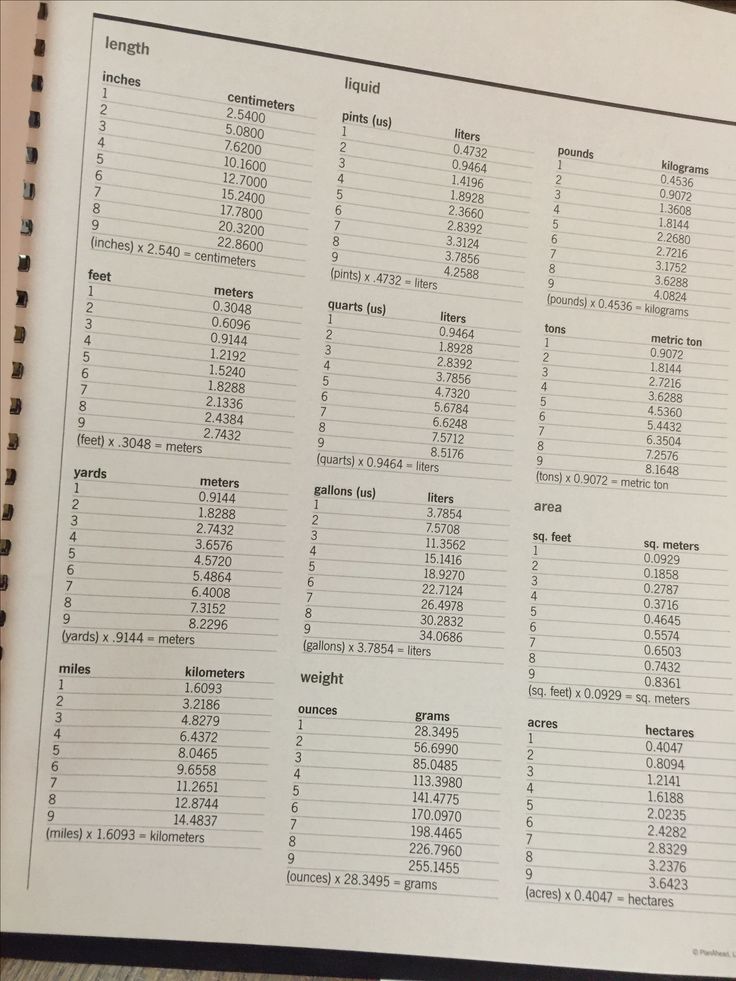


In the United States, soft drink dispensers often serve in liters. If you want to know the standard 32 fl oz equals in liters, you can calculate that 32 fl oz ≈ 0.946 L.
Considering Liters and Ounces in Different Contexts
Now that we've seen liters to ounces conversion in various scenarios, let's look at other units and facts to broaden our knowledge.
Liters and Ounces Compared
In everyday life, space is often a consideration. A cubic foot contains 28,316.811 fl oz, whereas the same volume in liters (2199.812 L) feels more substantial. This difference in perception is why most American homes use imperial measurements, while Europeans primarily use the metric system.


Moreover, a gallon (3.785 liters) is roughly 128 fl oz, making it easier to envision and compare volumes.
Ounces and U.S. Customary Units
The U.S. customary system also has divisions for measuring volume, such as the pint (473.176 mL or 16 fl oz) and the gallon (3785.412 mL). Understanding these helps in conversion and can make using recipes and shopping lists simpler, whether stateside or abroad.
Furthermore, though cups and ounces are both volume measures, one cup equals 8 ounces— another helpful conversion to remember.
In a nutshell, mastering liters to ounces conversion enables you to navigate various situations confidently, from cooking and shopping to traveling. Familiarizing yourself with related units in other systems brings an added layer of understanding. Happy converting!