The Jeep LJ, produced between 1976 and 1981, is a iconic vehicle that has left an indelible mark on the off-road and overlanding worlds. While Jeeps are renowned for their durability and ruggedness, understanding the specific dimensions of the LJ's frame can help enthusiasts restore, modify, or source parts for their vintage Jeeps. Let's delve into the crucial dimensions of the Jeep LJ frame.
The Jeep LJ, also known as the Jeep CJ-7, was built on a ladder-frame chassis, a classic design that has been used in several Jeep models. This robust frame design contributed to the LJ's legendary capability and longevity.
Understanding the Jeep LJ Frame
The Jeep LJ's frame served as the backbone of the vehicle, supporting the drivetrain, suspension, and body. It was primarily constructed from steel and featured a single, large frame section that ran along the underside of the vehicle from bumper to bumper.
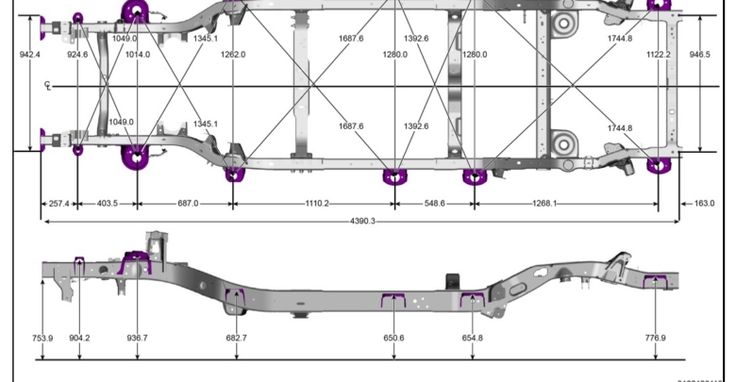


When discussing the dimensions of the Jeep LJ frame, it's crucial to differentiate between the dimensions of the frame itself and the dimensions of the vehicle that sits atop it. The former determines how parts fit and function, while the latter tells you about the space available inside and outside the Jeep.
Overall Frame Dimensions
The Jeep LJ's frame is roughly 82 inches (208.3 cm) long from the front of the engine bay to the rear of the transmission mounting points. Its width can vary slightly depending on the specific model and year, but it typically measures around 38 inches (96.5 cm) wide at the center. The average height of the frame, from the ground to the top of the rail, is about 7 inches (17.8 cm).


These dimensions, while essential, only scratch the surface of the frame's complexity. The frame's length, width, and height vary across different points due to its ladder-like design, which raises its center and tapers towards the ends. Additionally, the frame's thickness can fluctuate, averaging around 1.5 to 2 inches (3.8 to 5.1 cm).
Wheelbase and Track Width
The wheelbase of the Jeep LJ, which is the distance between the centers of the front and rear wheels, measures around 93.5 inches (237.5 cm). This relatively long wheelbase, combined with the LJ's wide track width (ranging from 47 to 55 inches or 119.4 to 140 cm, depending on the year and model), contributed to the LJ's exceptional off-road capabilities.
The track width, the distance between the left and right wheels, varied throughout the LJ's production run. Early models had a wider track width to accommodate larger tires, while later models featured a narrower track width to accommodate smaller tires and improve on-road handling. Understanding these variations can help LJ owners make informed decisions when sourcing tires or setting up their suspensions.


The importance of Frame Dimensions for Restoring and Modifying Jeep LJs
Knowing the dimensions of the Jeep LJ frame is invaluable for anyone seeking to restore, modify, or maintain these classic Jeeps. Accurate dimensions help ensure that replacement parts fit correctly and that modifications won't compromise the vehicle's structural integrity.
For instance, understanding the frame's dimensions can help you select the right tub (body) to restore your LJ, or determine if a specific engine or transmission will fit. It can also guide you in designing custom modifications, such as lifted suspensions or wider tire setups, ensuring that they don't compromise the frame's strength or the vehicle's handling.
Finding Replacement Parts and Aftermarket Supports
Ensuring that replacement parts and aftermarket supports fit correctly is a critical aspect of any restoration or modification project. Knowledge of the LJ's frame dimensions can help you find compatible parts and ensure that any new components are tailored to your specific Jeep's frame dimensions.


Many aftermarket manufacturers offer LJ-specific parts, catering to the vehicle's unique frame dimensions. This can include components like reference points, gleaming trim pieces, or complete bodies. Regularly referring to your Jeep's frame dimensions will help ensure that you're sourcing and installing accurate, compatible parts.
Sourcing Vintage Parts and Chassis Swaps
When restoring or modifying Jeep LJs, it's not uncommon to search for vintage parts or to swap in components from other Jeep models. Knowing the LJ's frame dimensions can greatly simplify this process, allowing you to pinpoint compatible parts and avoid spending time and money on unsuitable pieces.
For instance, understanding the LJ's frame dimensions can help you identify whether a part intended for a CJ-6 or a CJ-8 will fit on your LJ. This knowledge can also guide you in choosing a suitable donor vehicle for a chassis swap, ensuring a seamless fit between disparate components.
In the world of vintage Jeeps, understanding the dimensions of the Jeep LJ frame is an essential skill for any enthusiast. By grasping the ins and outs of the LJ's frame dimensions, you can restore, modify, and maintain your classic Jeep with confidence. So, the next time you're under the hood of your LJ, armed with a tape measure and a keen eye, remember that you're not just gathering numbers—you're unlocking the secrets of this legendary vehicle's design.