Embarking on the rugged terrain of adventure and off-road exploration often equates to one iconic vehicle - the Jeep. With a rich history steeped in military service and enduring popular culture, Jeep has carved a niche for itself in the automotive industry. But what exactly are the technical specs that make these vehicles stand out? Let's delve into the intricate details that define Jeep's prowess both on and off the road.
Jeep's prowess stems from its robust build, designed to withstand challenging conditions. Their design philosophy centers around safety, reliability, and capability. This dedication to quality and prowess is evident in every component, making each model a testament to engineering excellence.
Engine power and performance
At the heart of every Jeep lies a powerful engine, fueling its unyielding drive and capability. Engines range from turbo I4s to V8s, churning out impressive horsepower and torque for their respective classes.


The Jeep Grand Cherokee, for instance, offers a 3.6L Pentastar V6 engine that produces 295 hp. Meanwhile, the Wrangler Rubicon comes with an optional 2.0L turbocharged inline 4-cylinder engine, delivering 270 hp. The Jeep lineup also boasts V8 engines, such as the 5.7L HEMI V8 in the Grand Cherokee SRT, pushing out an impressive 475 hp.
Transmission and four-wheel drive systems
Jeep's renowned off-road capability owes much to its diverse range of four-wheel drive systems. Each Jeep model is equipped with one of several 4x4 systems, ranging from part-time to full-time, and designed for specific driving needs.


The Jeep Wrangler, for example, features the Command-Trac and Rock-Trac 4x4 systems. Command-Trac is a full-time, active, on-demand 4x4 system, while Rock-Trac is a Gross Axle-Traction (GAT) full-time 4x4 system intended for extreme off-road conditions. The Cherokee, on the other hand, comes with the Jeep Active Drive 1 & 2 systems, designed for all-terrain traction and improved fuel efficiency.
Towing capacity and payload
Jeep SUVs are not just capable off-road; they're equally impressive on-road, towing trailers and hauling cargo with an impressive payload. The Jeep lineup offers best-in-class towing capacity, the robust Ram 1500 being the highlight with a 12,750 lbs towing capacity.
The Grand Cherokee also shines with a 7,200 lbs towing capacity, while lesser-known models, such as the Compass and Renegade, can still tow between 1,000 to 2,000 lbs. Payload capacity ranges from 600 lbs in the Wrangler to 1,520 lbs in the Gladiator, more than enough for work, play, or both.


Off-road capabilities
The Jeep brand is synonymous with off-road prowess, backed by robust hardware and advanced tech such as Selec-Terrain traction management systems and available locking differentials.
Jeep's modular architecture ensures that their vehicles like the Wrangler and Gladiator boast impressive off-road credentials. These include approach, departure, and breakover angles, along with ground clearance. The Wrangler's 4x4 systems and selectable 2- or 4-wheel-drive modes allow astounding capability on and off the pavement.
Underbody armor and skid plates
Every Jeep comes standard or optional with underbody armor for enhanced protection. Components such as skid plates, fender flares, and rock rails help to safeguard critical components from rugged terrain.
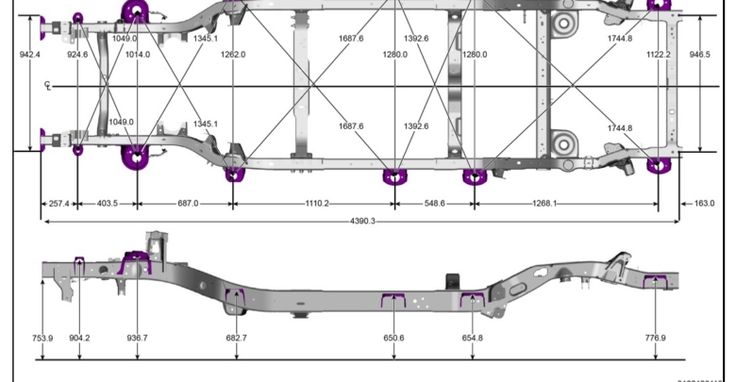

The Jeep Wrangler, for example, offers optional stainless steel rock sliders and skid plates for the oil pan, transfer case, and fuel tank. The Gladiator, Jeep's truck, comes standard with skid plates for the engine, transmission, transfer case, fuel tank, and front suspension. Enhanced armor ensures that your adventure needn't end due to minor obstacles.
From engine power to off-road prowess and beyond, Jeep technical specifications boast exceptional precision and ingenuity. Regardless of terrain or driving conditions, each Jeep model is crafted for a capable, reliable, and thrilling experience. So, what are you waiting for? Experience the Savoy difference and test drive a Jeep today!