Off-roading has always been an exhilarating pursuit, but with the advent of electric skateboards, the 'off-road electric skateboard motor' has taken center stage. These motors are designed to power skateboards across varied terrains, revolutionizing the way we think about sustainable commuting and thrill-seeking alike.
At the heart of every off-road electric skateboard lies a robust, powerful motor, which is not only the engine that propels the board but also the backbone of its durability. While the electric skateboard market is flooded with different types of motors, choosing the right off-road electric skateboard motor can be quite daunting, and that's what we're here to help with.
Understanding Off-Road Electric Skateboard Motors
The first step in selecting the right off-road electric skateboard motor is understanding the different types available. Among the most common are hub motors, belt-driven motors, and in-wheel motors. Each type has its own set of benefits and drawbacks, which we'll delve into.


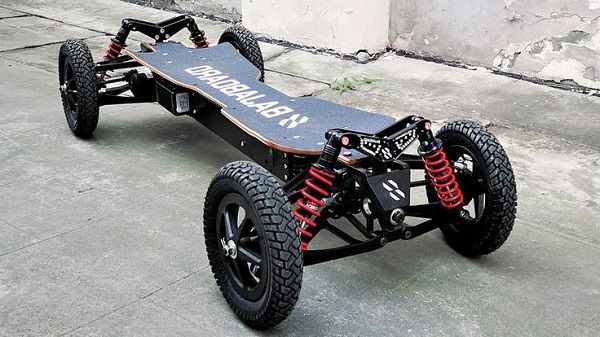
Off-road skateboard motors need to be more powerful, since they'll be dealing with rugged terrain, slopes, and the extra weight that comes with rugged, all-terrain tires. Therefore, we'll be focusing on watts per pound and voltage, important factors that determine the motor's power and speed capabilities.
Hub Motors
Hub motors are enclosed within the wheel itself, integrating both the motor and wheel. This design provides a lower center of gravity, making the board more stable and agile. For off-road skateboards, the direct-drive hub motor is particularly useful due to its ability to tackle steep inclines and challenging terrains.


However, hub motors also come with their share of disadvantages. They can get quite heavy, slowing down the board's acceleration. Additionally, the heat buildup in hub motors, due to the lack of ventilation, can lead to reduced lifespan.
Belt-Driven Motors
Belt-driven motors are an upgrade in power and performance compared to hub motors. They efficiently transfer energy from the motor to the wheel, providing more horsepower and higher top speeds. This power transfer allows for faster acceleration, making belt-driven motors perfect for those seeking a thrilling and faster off-road riding experience.
On the downside, belt-driven motors need regular pulley and belt replacements due to their wear-and-tear nature. They also require significant maintenance, such as belt tensioning and pulley alignment, to function optimally.


Key Factors to Consider When Choosing an Off-Road Electric Skateboard Motor
After understanding the different types of motors, the next step is to consider the factors that can elevate your off-road experience. Heavier-duty motors, capable of climbing steep inclines and tackling rough terrains, will be crucial. However, the motor's size and weight also need to be taken into account to ensure they don't compromise the board's portability and maneuverability.
Watts, voltage, andCadence also play a significant role. Higher watts equate to more power, and higher voltage means a faster acceleration and speed. Cadence, or the number of motor rotations per minute, affects how smoothly the board performs on varied terrains. It's all about finding the right balance between power and control.
Power and Performance
Power is the heart of any off-road electric skateboard motor. As a rule of thumb, higher wattage means more torque, allowing you to accelerate faster and climb steeper hills. For off-road purposes, look for motors with at least 1200 watts and 24 volts, offering a balance between power and battery life.


But remember, more power also means higher costs, and increased heat generation. Therefore, while selecting a motor, ensure it's outfitted with adequate cooling mechanisms to keep overheating at bay, prolonging the motor's life.
Battery Life and Weight
Longer battery life and lighter weight are two key features of a good off-road motor. Since off-road terrains can be unpredictable, you'd want a motor that can go the extra mile without adding too much weight to the board. This is where the debate between lithium-ion and lead acid batteries comes in.
Lithium-ion batteries are lighter and retain their charge longer than lead acid batteries, but they are also more expensive. So, the weight-to-cost ratio becomes an important consideration. Regardless of the type you choose, ensure the battery is PURC (Pack Uranium Replacement Capability) certified for safety and longevity.
In the rapidly evolving world of off-road electric skateboards, understanding the specifics of off-road electric skateboard motors is vital. By learning about the various types, their unique characteristics, and the key factors to consider, you're ready to make an informed decision and choose the perfect power companion for your off-road adventures.