Discovering the thrill of off-road adventures on a skateboard has become a reality, thanks to the innovative incorporation of hub motors. These powerful, compact devices are revolutionizing the way we commute and enjoy the great outdoors. Let's delve into the exciting world of off-road skateboard hub motors, exploring their benefits, types, and how they're transforming the skater's experience.
At the heart of this transformation lies the off-road skateboard hub motor. Unlike traditional skateboards that rely on manual locomotion or remote-controlled devices, hub motors are integrated directly into the wheels of the skateboard. This integration allows for an efficient, smooth, and seamless riding experience, both on and off the road.
Understanding Off-Road Skateboard Hub Motors
The primary components of a hub motor include the stator, rotor, shaft, and electronics. The stator houses the coil windings that generate the magnetic field, while the rotor, equipped with permanent magnets, rotates to propel the wheel. The shaft transmits this motion to the wheel, and the electronics manage the motor's power and functionality.


Off-road hub motors are specifically designed to withstand rigorous conditions. They feature robust construction, durable materials, and enhanced water resistance to tackle uneven terrain, mud, and water obstacles. Moreover, they often come with large, knobby tires designed to improve grip and stability on challenging surfaces.
Advantages of Off-Road Skateboard Hub Motors
1. **Enhanced Mobility**: Hub motors empower users to traverse varied terrains, making skaters less dependent on smooth surfaces. This widened accessibility allows commuters to explore more routes and adventurers to enjoy escapades off the beaten track.

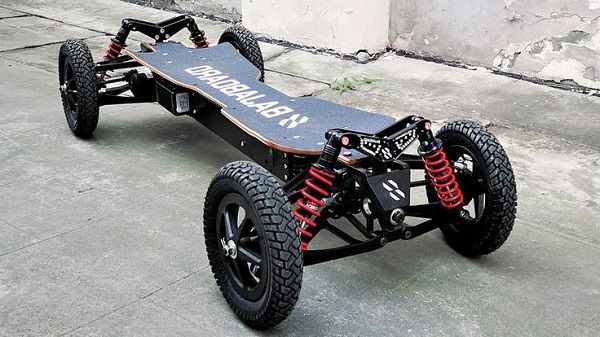

2. **Electric Assist**: The motor's power can be used to augment momentum when skating uphill or battling headwinds, reducing physical exertion and allowing longer, further rides.
Disadvantages and Criticisms
1. **Limited Range**: Despite advancements, hub motor-powered skateboards have limited battery life, necessitating regular charging or carries a spare battery.
2. **Weight and Portability**: While off-road hub motors enable rigorous riding, the additional weight and size can make skateboards less portable, which may be an issue when traveling or commuting.


Types of Off-Road Skateboard Hub Motors
Choosing the right hub motor depends on your riding style and terrain.
Single Motor vs. Dual Motor Skateboards
Single motor skateboards usually feature a hub motor only in the rear wheel. While these skateboards are lightweight and affordable, they may lack stability and power for off-road adventures. Dual motor skateboards, with hub motors in both wheels, provide enhanced control, speed, and stability, perfect for off-road expeditions.
Motor Power and Speed
Hub motors are rated by power in watts and can achieve speeds up to 20 mph or more. More powerful motors equate to faster acceleration and higher top speeds but come at the cost of battery life and board weight. Choosing the right motor power is a Balance between speed, power, and range.


Wheel Size
Skateboards with larger wheels (over 8 inches in diameter) are designed for off-road use, providing better stability and shock absorption for rough terrains. The most common hub motors for off-road skateboards are 97mm or 100mm in diameter.
Off-road skateboards equipped with hub motors are more than just a fad; they represent a breakthrough in personal transport. By embracing these innovative designs, skaters are redefining their boundaries, blazing new trails, and reimagining their journeys, one electrifying ride at a time. So, if you're ready to kickstart your off-road adventure, embrace the future of skating, and get rolling with an off-road skateboard hub motor today!