Ever found yourself scratching your head over tire size codes? You're not alone. They can seem like a puzzle, but with a bit of understanding, they're actually quite straightforward. Today, we're diving into 285/75R17, a common size for light trucks and SUVs. Let's break it down.
The code 285/75R17, often seen on tires, is like a secret language of the automotive world. But once you speak the language, you'll find it quite useful. So, let's get started.
Understanding Tire Size Codes
Tire size codes are designed to provide essential information about a tire's dimensions. They follow a specific pattern: two numbers separated by a slash, followed by an aspect ratio, an 'R' (for radial), and finally, a Dimensions are usually expressed in inches.


Understanding these components will help you interpret tire size codes with ease.
Width and Profile
The first two numbers represent the tire's width (in millimeters) and profile (as a percentage of the tire's width). In the case of 285/75R17, the tire is 285mm wide and has a profile of 75%. This means the sidewall height is 75% of the tire's width.


But why does this matter? The profile, or aspect ratio, influences the tire's handling and traction. Lower profile tires (like 50%) typically offer better handling and grip, while higher profile tires (like 80%) provide a smoother ride.
Wheel Diameter
The 'R' in 285/75R17 stands for radial construction, which uses cords at various angles to create a strong, flexible tire. After the 'R' comes the tire's inner, or bead, diameter in inches. In this case, it's 17 inches.
This number is crucial because it must correspond to the diameter of your vehicle's wheels. Using the wrong size can cause issues with fit, comfort, and safety.


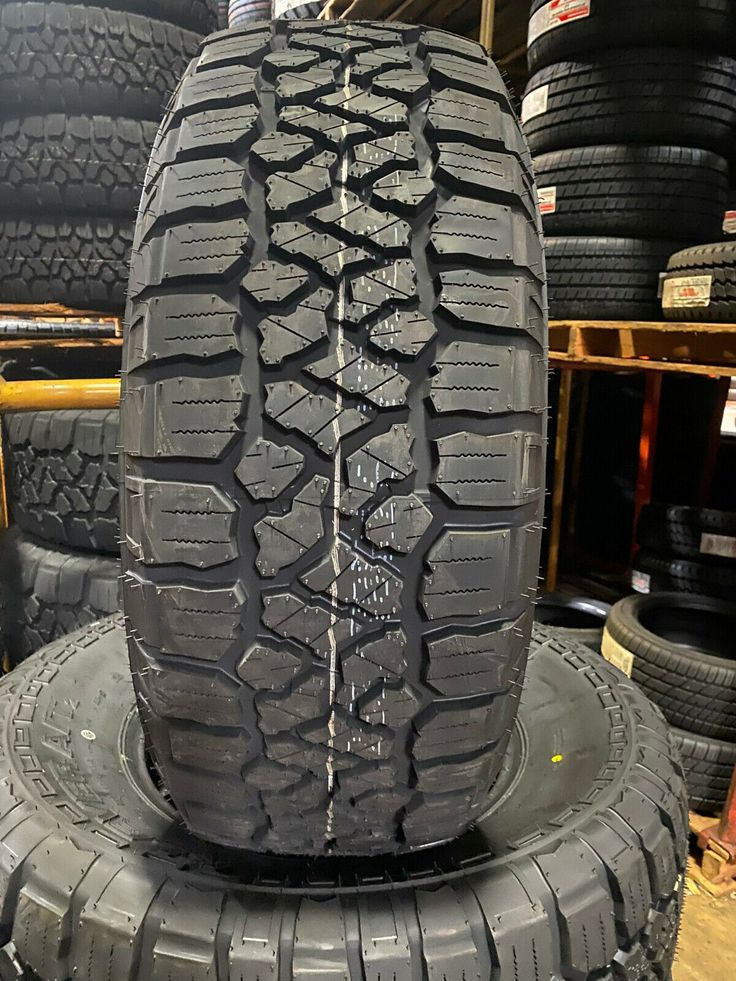
Practical Examples
Now that we understand the code, let's consider a couple of scenarios.
Installing 285/75R17 on a SUV
You've got a SUV that came with 265/70R17 tires, but you want a wider, more aggressive look. You're thinking about upgrading to 285/75R17. The change in width (from 265mm to 285mm) provides a more muscular appearance, while the higher profile maintains the same ride comfort.
However, always ensure that your vehicle can accommodate the new tire size without rubbing against the wheel wells or suspension components.


Mixing Tire Sizes
What if you want to replace only one tire due to wear and tear? Can you mix tire sizes? The short answer is: only if absolutely necessary and temporarily. Mixing tire sizes can negatively affect handling, traction, and overall vehicle dynamics. It's generally best to replace all four tires simultaneously.
Understanding tire size codes is the first step in maintaining and upgrading your tires. Knowing the dimensions and properties of 285/75R17 allows you to make informed decisions about your vehicle's tire needs. So, the next time you're browsing the tire rack, you'll know exactly what each size can offer.