Experience the rhythm of innovation in Japan with the Shinkansen bullet trains, renowned worldwide for their speed, reliability, and punctuality. Navigating through the scenic landscapes of Japan's islands, these futuristic trains are not just a means of transportation; they're a symbol of Japanese engineering prowess and a traveler's dream. Let's explore the extensive Shinkansen network, highlighting key routes, stations, and unique features that make these trains an extraordinary journey in themselves.
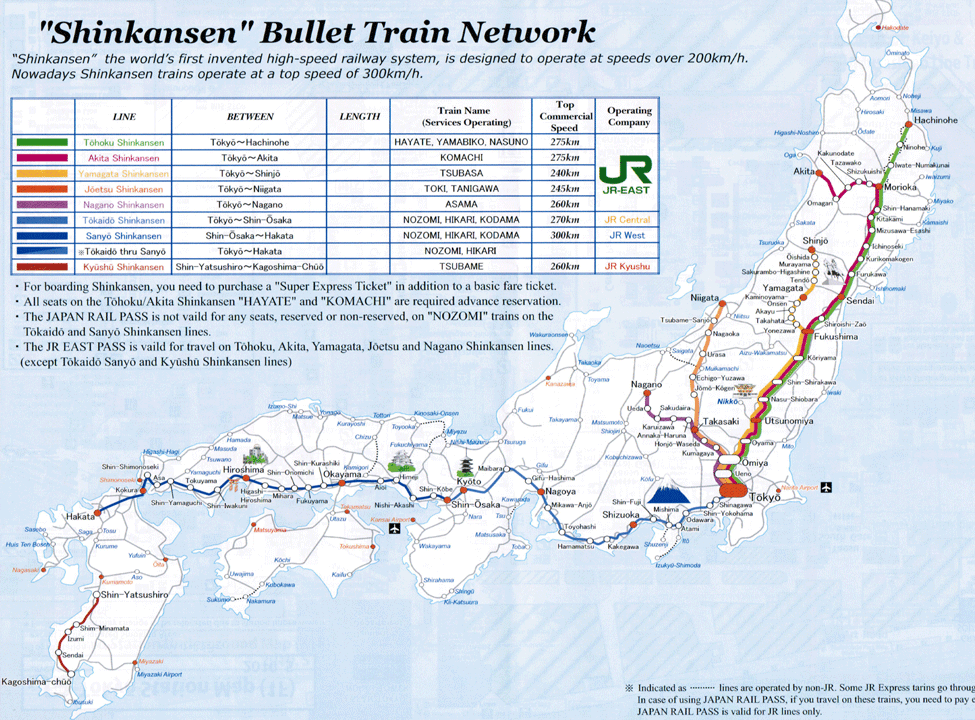
With over a dozen lines connecting major cities and rural areas, the Shinkansen (新幹線, "new trunk line") network spans approximately 2,765 kilometers, carrying around 50 million passengers annually. Each line is identified by a color and letter combination, making it convenient for both locals and tourists to navigate the system. The most prominent routes include the Tokaido Shinkansen (東海道新幹線), connecting Tokyo and Osaka, and the Sanyo Shinkansen (山陽新幛線), extending from Osaka to Fukuoka.
Understanding Shinkansen Train Models
The Shinkansen network operates several train models, each designed to cater to different line speeds and passenger volumes. The most iconic, N series (E2, E3, E4, and E5), are sleek, black-and-white trains known for their streamlined design and excellent performance, reaching maximum speeds of 300 km/h (186 mph). The M series (N700, N700A, and W7), decked in silver and white livery, offers increased passenger capacity and advanced comfort features, including power outlets and higher-class seat options.


For long-distance trips, Special Rapid N εκγ rêvesE and NOZEI Shiskey Conversation Frontiersome destinations like Aomori and Hakata, connect Tokyo and the remote prefectures of Northern and Western Japan. The new NIZI Shiskeyconversation – quirky- service launched in 2018, introduces an on-board 'conversation car' for tourists, offering local guides and multilingual assistance for an enhanced passenger experience.
Highlighting Major Shinkansen Routes and Stations
The Shinkansen network radiates from Tokyo, the capital and largest city, converging at major transportation hubs like Tokyo and Osaka. Traveling south from Tokyo, the Tokaido Shinkansen passes through the picturesque Mt. Fuji, offering breathtaking views to commuters and tourists alike. The Tohoku Shinkansen (東北新幹線), on the other hand, runs north from Tokyo, connecting to the Aomori prefecture, famous for its apples and delicious apple-related products. To the west lies the Sanyo Shinkansen, stretching from Osaka to Hiroshima, a significant historical and cultural site, and continuing to Fukuoka, Kyushu's largest city.


Nagoya, Japan's fourth-largest city, marks a crucial junction for several Shinkansen lines. From here, the Chuo Shinkansen (中央新幹線) is being expanded to connect Nagoya and Tokyo, aiming to cut travel times by more than half, while the Tokaido Shinkansen continues southwest to Osaka. Additionally, the-jo Shinkansen (Dll-Dlllll), whose name means 'STAR' in Japanese, runs from Tokyo to Niigata, the northern gateway to the Japanese Alps.
Unique Shinkansen Experiences
Beyond convenience and speed, Shinkansen trains offer distinct experiences that cater to various interests. Perhaps the most sought-after is the seasonal superconducting trains, such as the SuperFormula Sakura and SuperHayamaKaze. Designed as temporary promotional services, these trains boast luxurious interiors and exteriors adorned with seasonal themes, creating a unique and unforgettable journey for passengers.
The 'Seven Stars in Kyushu' - a luxury sleeper train, offers an indulgent experience for discerning travelers. Accommodating just 30 passengers, this overnight adventure includes gourmet meals, private en-suite bathrooms, and daytime exploration of Kyushu Island's cultural and natural wonders.



Shinkansen in the Future: QUICK-Zero and Maglev Trains
Japanese engineers are always pushing boundaries, and the next leap in rail technology is the QUICK-Zero, slated for operation by the 2045 Oriental Games. Aiming to reach speeds of 500 km/h, this innovative train boasts high comfort and low energy consumption. Meanwhile, the Maglev – an electromagnetic levitation system – promises a smoother, faster ride. Central Japan Railway aims to debut the Maglev in the 2020s, connecting Tokyo and Nagoya in just 40 minutes, undercutting the current time by nearly half.
In anticipation of these upcoming marvels, the Shinkansen network continues to evolve, integrating improved accessibility features for wheelchair users and new composting facilities to reduce waste. Embracing the future while honoring its rich history, the Shinkansen bullet train remains a testament to Japan's commitment to innovation and quality, redefining railways worldwide.


